| // Copyright (c) 2024, the Dart project authors. Please see the AUTHORS file |
| // for details. All rights reserved. Use of this source code is governed by a |
| // BSD-style license that can be found in the LICENSE file. |
| // |
| // API docs from [MDN Web Docs](https://developer.mozilla.org/en-US/docs/Web). |
| // Attributions and copyright licensing by Mozilla Contributors is licensed |
| // under [CC-BY-SA 2.5](https://creativecommons.org/licenses/by-sa/2.5/. |
| |
| // Generated from Web IDL definitions. |
| |
| // ignore_for_file: unintended_html_in_doc_comment |
| |
| @JS() |
| library; |
| |
| import 'dart:js_interop'; |
| |
| import 'resource_timing.dart'; |
| |
| typedef NavigationTimingType = String; |
| |
| /// The **`PerformanceNavigationTiming`** interface provides methods and |
| /// properties to store and retrieve metrics regarding the browser's document |
| /// navigation events. For example, this interface can be used to determine how |
| /// much time it takes to load or unload a document. |
| /// |
| /// Only the current document is included in the performance timeline, so there |
| /// is only one `PerformanceNavigationTiming` object in the performance |
| /// timeline. It inherits all of the properties and methods of |
| /// [PerformanceResourceTiming] and [PerformanceEntry]. |
| /// |
| /// The following diagram shows all of the timestamp properties defined in |
| /// `PerformanceNavigationTiming`. |
| /// |
| /// 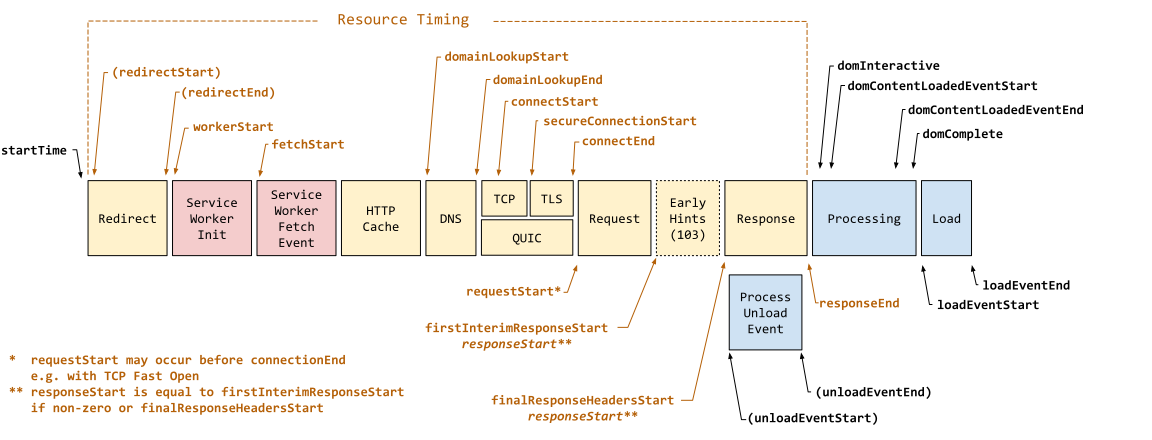 |
| /// |
| /// --- |
| /// |
| /// API documentation sourced from |
| /// [MDN Web Docs](https://developer.mozilla.org/en-US/docs/Web/API/PerformanceNavigationTiming). |
| extension type PerformanceNavigationTiming._(JSObject _) |
| implements PerformanceResourceTiming, JSObject { |
| /// The **`toJSON()`** method of the [PerformanceNavigationTiming] interface |
| /// is a ; it returns a JSON representation of the |
| /// [PerformanceNavigationTiming] object. |
| external JSObject toJSON(); |
| |
| /// The **`unloadEventStart`** read-only property returns a |
| /// [DOMHighResTimeStamp] representing the time immediately before the current |
| /// document's |
| /// [`unload`](https://developer.mozilla.org/en-US/docs/Web/API/Window/unload_event) |
| /// event handler starts. |
| external double get unloadEventStart; |
| |
| /// The **`unloadEventEnd`** read-only property returns a |
| /// [DOMHighResTimeStamp] representing the time immediately after the current |
| /// document's |
| /// [`unload`](https://developer.mozilla.org/en-US/docs/Web/API/Window/unload_event) |
| /// event handler completes. |
| external double get unloadEventEnd; |
| |
| /// The **`domInteractive`** read-only property returns a |
| /// [DOMHighResTimeStamp] representing the time immediately before the user |
| /// agent sets the document's |
| /// [`readyState`](https://developer.mozilla.org/en-US/docs/Web/API/Document/readyState) |
| /// to `"interactive"`. |
| /// |
| /// > **Note:** This property is **not** (TTI). This property refers to the |
| /// > time when DOM construction is finished and interaction to it from |
| /// > JavaScript is possible. See also the `interactive` state of |
| /// > [Document.readyState] which corresponds to this property. |
| /// |
| /// Measuring DOM processing time may not be consequential unless your site |
| /// has a very large HTML source to a construct a Document Object Model from. |
| /// |
| /// If there is no parser-blocking JavaScript then the |
| /// [`DOMContentLoaded`](https://developer.mozilla.org/en-US/docs/Web/API/Document/DOMContentLoaded_event) |
| /// event (see |
| /// [`domContentLoadedEventStart`](https://developer.mozilla.org/en-US/docs/Web/API/PerformanceNavigationTiming/domContentLoadedEventStart) |
| /// for the timestamp) will fire immediately after `domInteractive`. |
| external double get domInteractive; |
| |
| /// The **`domContentLoadedEventStart`** read-only property returns a |
| /// [DOMHighResTimeStamp] representing the time immediately before the current |
| /// document's |
| /// [`DOMContentLoaded`](https://developer.mozilla.org/en-US/docs/Web/API/Document/DOMContentLoaded_event) |
| /// event handler starts. |
| /// |
| /// Typically frameworks and libraries wait for the `DOMContentLoaded` event |
| /// before starting to run their code. We can use the |
| /// `domContentLoadedEventStart` and the |
| /// [`domContentLoadedEventEnd`](https://developer.mozilla.org/en-US/docs/Web/API/PerformanceNavigationTiming/domContentLoadedEventEnd) |
| /// properties to calculate how long this takes to run. |
| external double get domContentLoadedEventStart; |
| |
| /// The **`domContentLoadedEventEnd`** read-only property returns a |
| /// [DOMHighResTimeStamp] representing the time immediately after the current |
| /// document's |
| /// [`DOMContentLoaded`](https://developer.mozilla.org/en-US/docs/Web/API/Document/DOMContentLoaded_event) |
| /// event handler completes. |
| /// |
| /// Typically frameworks and libraries wait for the `DOMContentLoaded` event |
| /// before starting to run their code. We can use the |
| /// `domContentLoadedEventEnd` and the |
| /// [`domContentLoadedEventStart`](https://developer.mozilla.org/en-US/docs/Web/API/PerformanceNavigationTiming/domContentLoadedEventStart) |
| /// properties to calculate how long this takes to run. |
| external double get domContentLoadedEventEnd; |
| |
| /// The **`domComplete`** read-only property returns a [DOMHighResTimeStamp] |
| /// representing the time immediately before the user agent sets the |
| /// document's |
| /// [`readyState`](https://developer.mozilla.org/en-US/docs/Web/API/Document/readyState) |
| /// to `"complete"`. |
| /// |
| /// See also the `complete` state of [Document.readyState] which corresponds |
| /// to this property and refers to the state in which the document and all |
| /// sub-resources have finished loading. The state also indicates that the |
| /// [Window.load_event] event is about to fire. |
| external double get domComplete; |
| |
| /// The **`loadEventStart`** read-only property returns a |
| /// [DOMHighResTimeStamp] representing the time immediately before the current |
| /// document's |
| /// [`load`](https://developer.mozilla.org/en-US/docs/Web/API/Window/load_event) |
| /// event handler starts. |
| external double get loadEventStart; |
| |
| /// The **`loadEventEnd`** read-only property returns a [DOMHighResTimeStamp] |
| /// representing the time immediately after the current document's |
| /// [`load`](https://developer.mozilla.org/en-US/docs/Web/API/Window/load_event) |
| /// event handler completes. |
| external double get loadEventEnd; |
| |
| /// The **`type`** read-only property returns the type of navigation. |
| /// |
| /// You can use this property to categorize your navigation timing data as |
| /// each of these types will have different performance characteristics. Users |
| /// going back and forth might experience a faster site than users performing |
| /// navigation for the first time or submitting forms, etc. |
| /// |
| /// For example, if your site provides new content frequently, you might want |
| /// to refresh that content using |
| /// [Fetch](https://developer.mozilla.org/en-US/docs/Web/API/Fetch_API) or |
| /// similar and avoid users having to hit reload for the entire page all the |
| /// time. The `"reload"` type can help you find pages that are reloaded |
| /// frequently. |
| external NavigationTimingType get type; |
| |
| /// The **`redirectCount`** read-only property returns a number representing |
| /// the number of redirects since the last non-redirect navigation in the |
| /// current browsing context. |
| /// |
| /// The higher the number of redirects on a page, the longer the page load |
| /// time. To improve the performance of your web page, avoid multiple |
| /// redirects. |
| /// |
| /// The [PerformanceResourceTiming.redirectStart] and |
| /// [PerformanceResourceTiming.redirectEnd] properties can be used to measure |
| /// redirection time. Note that they will return `0` for cross-origin |
| /// redirects. |
| /// |
| /// Note that client side redirects, such as `<meta http-equiv="refresh" |
| /// content="0; url=https://example.com/">` are not considered here. |
| external int get redirectCount; |
| } |
| |
| /// > **Warning:** This interface is deprecated in the |
| /// > [Navigation Timing Level 2 specification](https://w3c.github.io/navigation-timing/#obsolete). |
| /// > Please use the [PerformanceNavigationTiming] interface instead. |
| /// |
| /// The **`PerformanceTiming`** interface is a legacy interface kept for |
| /// backwards compatibility and contains properties that offer performance |
| /// timing information for various events which occur during the loading and use |
| /// of the current page. You get a `PerformanceTiming` object describing your |
| /// page using the [Performance.timing] property. |
| /// |
| /// --- |
| /// |
| /// API documentation sourced from |
| /// [MDN Web Docs](https://developer.mozilla.org/en-US/docs/Web/API/PerformanceTiming). |
| extension type PerformanceTiming._(JSObject _) implements JSObject { |
| /// > **Warning:** This interface of this property is deprecated in the |
| /// > [Navigation Timing Level 2 specification](https://w3c.github.io/navigation-timing/#obsolete). |
| /// > Please use the [PerformanceNavigationTiming] |
| /// > interface instead. |
| /// |
| /// The legacy **`toJSON()`** method of the [PerformanceTiming] interface is a |
| /// ; it returns a JSON representation of the [PerformanceTiming] object. |
| external JSObject toJSON(); |
| |
| /// > **Warning:** This interface of this property is deprecated in the |
| /// > [Navigation Timing Level 2 specification](https://w3c.github.io/navigation-timing/#obsolete). |
| /// > Please use the [PerformanceNavigationTiming] interface instead. |
| /// |
| /// The legacy |
| /// **`PerformanceTiming.navigationStart`** |
| /// read-only property returns an `unsigned long long` representing the |
| /// moment, |
| /// in milliseconds since the UNIX epoch, right after the prompt for unload |
| /// terminates on |
| /// the previous document in the same browsing context. If there is no |
| /// previous document, |
| /// this value will be the same as [PerformanceTiming.fetchStart]. |
| external int get navigationStart; |
| |
| /// > **Warning:** This interface of this property is deprecated in the |
| /// > [Navigation Timing Level 2 specification](https://w3c.github.io/navigation-timing/#obsolete). |
| /// > Please use the [PerformanceNavigationTiming] |
| /// > interface instead. |
| /// |
| /// The legacy |
| /// **`PerformanceTiming.unloadEventStart`** |
| /// read-only property returns an `unsigned long long` representing the |
| /// moment, |
| /// in milliseconds since the UNIX epoch, the [Window.unload_event] event has |
| /// been thrown. If |
| /// there is no previous document, or if the previous document, or one of the |
| /// needed |
| /// redirects, is not of the same origin, the value returned is `0`. |
| external int get unloadEventStart; |
| |
| /// > **Warning:** This interface of this property is deprecated in the |
| /// > [Navigation Timing Level 2 specification](https://w3c.github.io/navigation-timing/#obsolete). |
| /// > Please use the [PerformanceNavigationTiming] |
| /// > interface instead. |
| /// |
| /// The legacy |
| /// **`PerformanceTiming.unloadEventEnd`** |
| /// read-only property returns an `unsigned long long` representing the |
| /// moment, |
| /// in milliseconds since the UNIX epoch, the [Window.unload_event] event |
| /// handler finishes. If |
| /// there is no previous document, or if the previous document, or one of the |
| /// needed |
| /// redirects, is not of the same origin, the value returned is `0`. |
| external int get unloadEventEnd; |
| |
| /// > **Warning:** This interface of this property is deprecated in the |
| /// > [Navigation Timing Level 2 specification](https://w3c.github.io/navigation-timing/#obsolete). |
| /// > Please use the [PerformanceNavigationTiming] |
| /// > interface instead. |
| /// |
| /// The legacy |
| /// **`PerformanceTiming.redirectStart`** |
| /// read-only property returns an `unsigned long long` representing the |
| /// moment, |
| /// in milliseconds since the UNIX epoch, the first HTTP redirect starts. If |
| /// there is no |
| /// redirect, or if one of the redirect is not of the same origin, the value |
| /// returned is |
| /// `0`. |
| external int get redirectStart; |
| |
| /// > **Warning:** This interface of this property is deprecated in the |
| /// > [Navigation Timing Level 2 specification](https://w3c.github.io/navigation-timing/#obsolete). |
| /// > Please use the [PerformanceNavigationTiming] |
| /// > interface instead. |
| /// |
| /// The legacy |
| /// **`PerformanceTiming.redirectEnd`** |
| /// read-only property returns an `unsigned long long` representing the |
| /// moment, |
| /// in milliseconds since the UNIX epoch, the last HTTP redirect is completed, |
| /// that is when |
| /// the last byte of the HTTP response has been received. If there is no |
| /// redirect, or if one |
| /// of the redirect is not of the same origin, the value returned is `0`. |
| external int get redirectEnd; |
| |
| /// > **Warning:** This interface of this property is deprecated in the |
| /// > [Navigation Timing Level 2 specification](https://w3c.github.io/navigation-timing/#obsolete). |
| /// > Please use the [PerformanceNavigationTiming] |
| /// > interface instead. |
| /// |
| /// The legacy |
| /// **`PerformanceTiming.fetchStart`** |
| /// read-only property returns an `unsigned long long` representing the |
| /// moment, |
| /// in milliseconds since the UNIX epoch, the browser is ready to fetch the |
| /// document using |
| /// an HTTP request. This moment is _before_ the check to any application |
| /// cache. |
| external int get fetchStart; |
| |
| /// > **Warning:** This interface of this property is deprecated in the |
| /// > [Navigation Timing Level 2 specification](https://w3c.github.io/navigation-timing/#obsolete). |
| /// > Please use the [PerformanceNavigationTiming] |
| /// > interface instead. |
| /// |
| /// The legacy |
| /// **`PerformanceTiming.domainLookupStart`** |
| /// read-only property returns an `unsigned long long` representing the |
| /// moment, |
| /// in milliseconds since the UNIX epoch, where the domain lookup starts. If a |
| /// persistent |
| /// connection is used, or the information is stored in a cache or a local |
| /// resource, the |
| /// value will be the same as [PerformanceTiming.fetchStart]. |
| external int get domainLookupStart; |
| |
| /// > **Warning:** This interface of this property is deprecated in the |
| /// > [Navigation Timing Level 2 specification](https://w3c.github.io/navigation-timing/#obsolete). |
| /// > Please use the [PerformanceNavigationTiming] |
| /// > interface instead. |
| /// |
| /// The legacy |
| /// **`PerformanceTiming.domainLookupEnd`** |
| /// read-only property returns an `unsigned long long` representing the |
| /// moment, |
| /// in milliseconds since the UNIX epoch, where the domain lookup is finished. |
| /// If a |
| /// persistent connection is used, or the information is stored in a cache or |
| /// a local |
| /// resource, the value will be the same as [PerformanceTiming.fetchStart]. |
| external int get domainLookupEnd; |
| |
| /// > **Warning:** This interface of this property is deprecated in the |
| /// > [Navigation Timing Level 2 specification](https://w3c.github.io/navigation-timing/#obsolete). |
| /// > Please use the [PerformanceNavigationTiming] |
| /// > interface instead. |
| /// |
| /// The legacy |
| /// **`PerformanceTiming.connectStart`** |
| /// read-only property returns an `unsigned long long` representing the |
| /// moment, |
| /// in milliseconds since the UNIX epoch, where the request to open a |
| /// connection is sent to |
| /// the network. If the transport layer reports an error and the connection |
| /// establishment is |
| /// started again, the last connection establishment start time is given. If a |
| /// persistent |
| /// connection is used, the value will be the same as |
| /// [PerformanceTiming.fetchStart]. |
| external int get connectStart; |
| |
| /// > **Warning:** This interface of this property is deprecated in the |
| /// > [Navigation Timing Level 2 specification](https://w3c.github.io/navigation-timing/#obsolete). |
| /// > Please use the [PerformanceNavigationTiming] |
| /// > interface instead. |
| /// |
| /// The legacy |
| /// **`PerformanceTiming.connectEnd`** |
| /// read-only property returns an `unsigned long long` representing the |
| /// moment, |
| /// in milliseconds since the UNIX epoch, where the connection is opened |
| /// network. If the |
| /// transport layer reports an error and the connection establishment is |
| /// started again, the |
| /// last connection establishment end time is given. If a persistent |
| /// connection is used, the |
| /// value will be the same as [PerformanceTiming.fetchStart]. A connection is |
| /// considered as opened when all secure connection handshake, or SOCKS |
| /// authentication, is |
| /// terminated. |
| external int get connectEnd; |
| |
| /// > **Warning:** This interface of this property is deprecated in the |
| /// > [Navigation Timing Level 2 specification](https://w3c.github.io/navigation-timing/#obsolete). |
| /// > Please use the [PerformanceNavigationTiming] interface instead. |
| /// |
| /// The legacy |
| /// **`PerformanceTiming.secureConnectionStart`** |
| /// read-only property returns an `unsigned long long` representing the |
| /// moment, |
| /// in milliseconds since the UNIX epoch, where the secure connection |
| /// handshake starts. If |
| /// no such connection is requested, it returns `0`. |
| external int get secureConnectionStart; |
| |
| /// > **Warning:** This interface of this property is deprecated in the |
| /// > [Navigation Timing Level 2 specification](https://w3c.github.io/navigation-timing/#obsolete). |
| /// > Please use the [PerformanceNavigationTiming] |
| /// > interface instead. |
| /// |
| /// The legacy |
| /// **`PerformanceTiming.requestStart`** |
| /// read-only property returns an `unsigned long long` representing the |
| /// moment, |
| /// in milliseconds since the UNIX epoch, when the browser sent the request to |
| /// obtain the |
| /// actual document, from the server or from a cache. If the transport layer |
| /// fails after the |
| /// start of the request and the connection is reopened, this property will be |
| /// set to the |
| /// time corresponding to the new request. |
| external int get requestStart; |
| |
| /// > **Warning:** This interface of this property is deprecated in the |
| /// > [Navigation Timing Level 2 specification](https://w3c.github.io/navigation-timing/#obsolete). |
| /// > Please use the [PerformanceNavigationTiming] |
| /// > interface instead. |
| /// |
| /// The legacy |
| /// **`PerformanceTiming.responseStart`** |
| /// read-only property returns an `unsigned long long` representing the moment |
| /// in |
| /// time (in milliseconds since the UNIX epoch) when the browser received the |
| /// first byte of |
| /// the response from the server, cache, or local resource. |
| external int get responseStart; |
| |
| /// > **Warning:** This interface of this property is deprecated in the |
| /// > [Navigation Timing Level 2 specification](https://w3c.github.io/navigation-timing/#obsolete). |
| /// > Please use the [PerformanceNavigationTiming] |
| /// > interface instead. |
| /// |
| /// The legacy |
| /// **`PerformanceTiming.responseEnd`** |
| /// read-only property returns an `unsigned long long` representing the |
| /// moment, |
| /// in milliseconds since the UNIX epoch, when the browser received the last |
| /// byte of the |
| /// response, or when the connection is closed if this happened first, from |
| /// the server from |
| /// a cache or from a local resource. |
| external int get responseEnd; |
| |
| /// > **Warning:** This interface of this property is deprecated in the |
| /// > [Navigation Timing Level 2 specification](https://w3c.github.io/navigation-timing/#obsolete). |
| /// > Please use the [PerformanceNavigationTiming] |
| /// > interface instead. |
| /// |
| /// The legacy |
| /// **`PerformanceTiming.domLoading`** |
| /// read-only property returns an `unsigned long long` representing the |
| /// moment, |
| /// in milliseconds since the UNIX epoch, when the parser started its work, |
| /// that is when its |
| /// [Document.readyState] changes to `'loading'` and the |
| /// corresponding [Document.readystatechange_event] event is thrown. |
| external int get domLoading; |
| |
| /// > **Warning:** This interface of this property is deprecated in the |
| /// > [Navigation Timing Level 2 specification](https://w3c.github.io/navigation-timing/#obsolete). |
| /// > Please use the [PerformanceNavigationTiming] |
| /// > interface instead. |
| /// |
| /// The legacy |
| /// **`PerformanceTiming.domInteractive`** |
| /// read-only property returns an `unsigned long long` representing the |
| /// moment, |
| /// in milliseconds since the UNIX epoch, when the parser finished its work on |
| /// the main |
| /// document, that is when its [Document.readyState] changes to |
| /// `'interactive'` and the corresponding [Document.readystatechange_event] |
| /// event is |
| /// thrown. |
| /// |
| /// This property can be used to measure the speed of loading websites that |
| /// users |
| /// _feels_. Nevertheless there are a few caveats that happens if scripts are |
| /// blocking rendering and not loaded asynchronously or with custom Web fonts. |
| /// [Check if you are in one of these cases](https://www.stevesouders.com/blog/2015/08/07/dominteractive-is-it-really/) |
| /// before using this property as a proxy for the |
| /// user experience of a website's speed of loading. |
| external int get domInteractive; |
| |
| /// > **Warning:** This interface of this property is deprecated in the |
| /// > [Navigation Timing Level 2 specification](https://w3c.github.io/navigation-timing/#obsolete). |
| /// > Please use the [PerformanceNavigationTiming] |
| /// > interface instead. |
| /// |
| /// The legacy |
| /// **`PerformanceTiming.domContentLoadedEventStart`** |
| /// read-only property returns an `unsigned long long` representing the |
| /// moment, |
| /// in milliseconds since the UNIX epoch, right before the parser sent the |
| /// [Document.DOMContentLoaded_event] event, that is right after all the |
| /// scripts that need to be |
| /// executed right after parsing has been executed. |
| external int get domContentLoadedEventStart; |
| |
| /// > **Warning:** This interface of this property is deprecated in the |
| /// > [Navigation Timing Level 2 specification](https://w3c.github.io/navigation-timing/#obsolete). |
| /// > Please use the [PerformanceNavigationTiming] |
| /// > interface instead. |
| /// |
| /// The legacy |
| /// **`PerformanceTiming.domContentLoadedEventEnd`** |
| /// read-only property returns an `unsigned long long` representing the |
| /// moment, |
| /// in milliseconds since the UNIX epoch, right after all the scripts that |
| /// need to be |
| /// executed as soon as possible, in order or not, has been executed. |
| external int get domContentLoadedEventEnd; |
| |
| /// > **Warning:** This interface of this property is deprecated in the |
| /// > [Navigation Timing Level 2 specification](https://w3c.github.io/navigation-timing/#obsolete). |
| /// > Please use the [PerformanceNavigationTiming] |
| /// > interface instead. |
| /// |
| /// The legacy |
| /// **`PerformanceTiming.domComplete`** |
| /// read-only property returns an `unsigned long long` representing the |
| /// moment, |
| /// in milliseconds since the UNIX epoch, when the parser finished its work on |
| /// the main |
| /// document, that is when its [Document.readyState] changes to |
| /// `'complete'` and the corresponding [Document.readystatechange_event] event |
| /// is |
| /// thrown. |
| external int get domComplete; |
| |
| /// > **Warning:** This interface of this property is deprecated in the |
| /// > [Navigation Timing Level 2 specification](https://w3c.github.io/navigation-timing/#obsolete). |
| /// > Please use the [PerformanceNavigationTiming] |
| /// > interface's [PerformanceNavigationTiming.loadEventStart] read-only |
| /// > property instead. |
| /// |
| /// The legacy |
| /// **`PerformanceTiming.loadEventStart`** |
| /// read-only property returns an `unsigned long long` representing the |
| /// moment, |
| /// in milliseconds since the UNIX epoch, when the [Window.load_event] event |
| /// was sent for the |
| /// current document. If this event has not yet been sent, it returns `0.` |
| external int get loadEventStart; |
| |
| /// > **Warning:** This interface of this property is deprecated in the |
| /// > [Navigation Timing Level 2 specification](https://w3c.github.io/navigation-timing/#obsolete). |
| /// > Please use the [PerformanceNavigationTiming] |
| /// > interface's [PerformanceNavigationTiming.loadEventEnd] read-only |
| /// > property instead. |
| /// |
| /// The legacy |
| /// **`PerformanceTiming.loadEventEnd`** |
| /// read-only property returns an `unsigned long long` representing the |
| /// moment, |
| /// in milliseconds since the UNIX epoch, when the [Window.load_event] event |
| /// handler |
| /// terminated, that is when the load event is completed. If this event has |
| /// not yet been |
| /// sent, or is not yet completed, it returns `0.` |
| external int get loadEventEnd; |
| } |
| |
| /// The legacy **`PerformanceNavigation`** interface represents information |
| /// about how the navigation to the current document was done. |
| /// |
| /// > **Warning:** This interface is deprecated in the |
| /// > [Navigation Timing Level 2 specification](https://w3c.github.io/navigation-timing/#obsolete). |
| /// > Please use the [PerformanceNavigationTiming] interface instead. |
| /// |
| /// An object of this type can be obtained by calling the |
| /// [Performance.navigation] read-only attribute. |
| /// |
| /// --- |
| /// |
| /// API documentation sourced from |
| /// [MDN Web Docs](https://developer.mozilla.org/en-US/docs/Web/API/PerformanceNavigation). |
| extension type PerformanceNavigation._(JSObject _) implements JSObject { |
| static const int TYPE_NAVIGATE = 0; |
| |
| static const int TYPE_RELOAD = 1; |
| |
| static const int TYPE_BACK_FORWARD = 2; |
| |
| static const int TYPE_RESERVED = 255; |
| |
| /// > **Warning:** This interface of this property is deprecated in the |
| /// > [Navigation Timing Level 2 specification](https://w3c.github.io/navigation-timing/#obsolete). |
| /// > Please use the [PerformanceNavigationTiming] |
| /// > interface instead. |
| /// |
| /// The **`toJSON()`** method of the [PerformanceNavigation] interface is a ; |
| /// it returns a JSON representation of the [PerformanceNavigation] object. |
| external JSObject toJSON(); |
| |
| /// The legacy |
| /// **`PerformanceNavigation.type`** |
| /// read-only property returns an `unsigned short` containing a constant |
| /// describing how the navigation to this page was done. |
| /// |
| /// > **Warning:** This interface of this property is deprecated in the |
| /// > [Navigation Timing Level 2 specification](https://w3c.github.io/navigation-timing/#obsolete). |
| /// > Please use the [PerformanceNavigationTiming] interface instead. |
| external int get type; |
| |
| /// The legacy |
| /// **`PerformanceNavigation.redirectCount`** |
| /// read-only property returns an `unsigned short` representing the number of |
| /// REDIRECTs done before reaching the page. |
| /// |
| /// > **Warning:** This interface of this property is deprecated in the |
| /// > [Navigation Timing Level 2 specification](https://w3c.github.io/navigation-timing/#obsolete). |
| /// > Please use the [PerformanceNavigationTiming] interface instead. |
| external int get redirectCount; |
| } |
