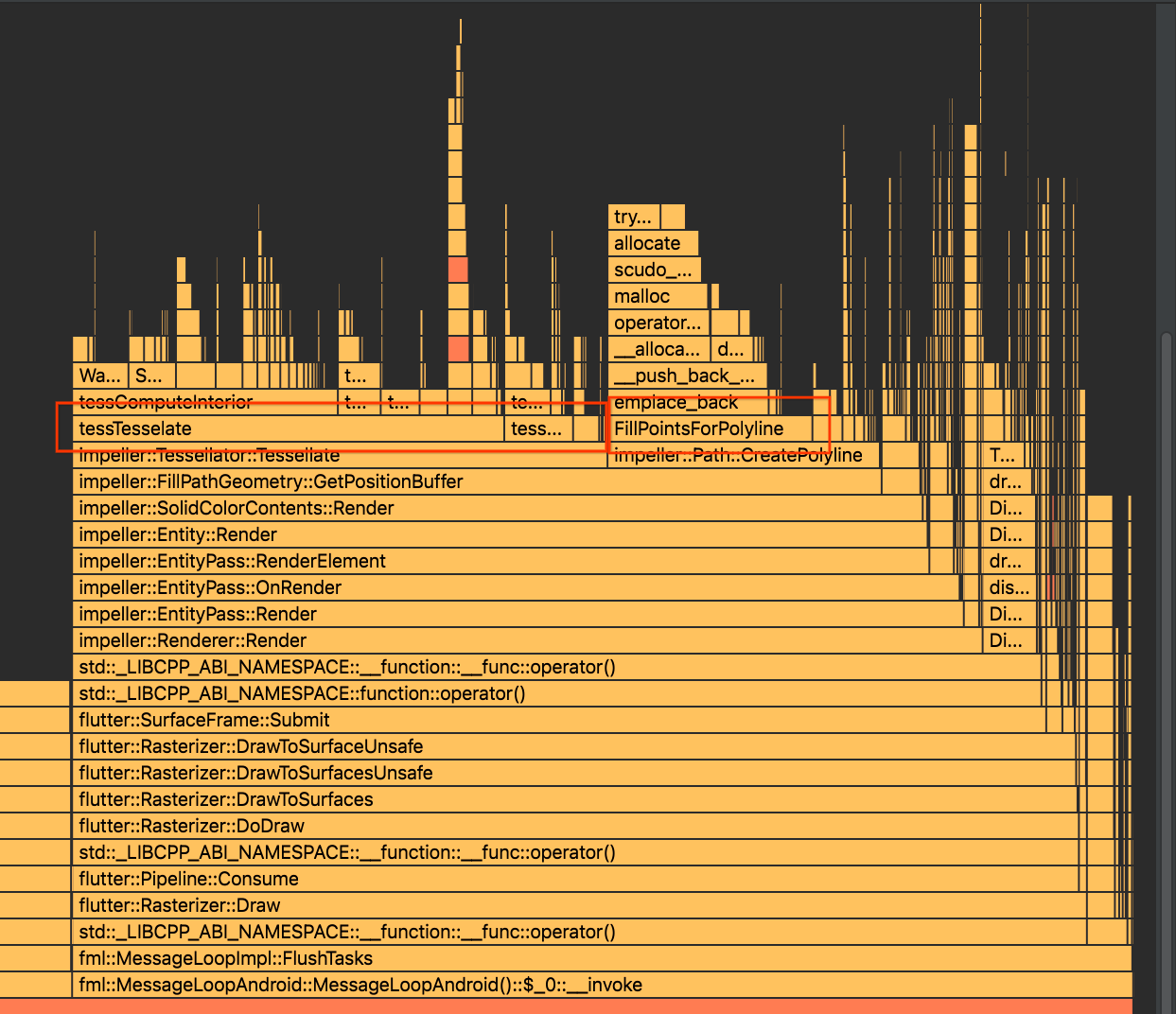
[Impeller] Reduce allocations for polyline generation (#47837)

Before this patch, polyline generation did lots of small allocations over and over again.

Now, `Path::CreatePolyline` takes a `std::vector<Point>` that the caller can reserve such that it won't likely need to be resized. The tessellator has been updated to hold a thread_local point buffer that gets reused and avoids lots of intra-frame allocation. This improves the profiles seen in https://github.com/flutter/flutter/issues/138004, specifically around the [`FillPointsForPolyline` time](https://user-images.githubusercontent.com/8975114/281116688-2d519d24-7838-405c-9e99-df5ceacf0917.png)

This very significantly improves the benchmarking data in geometry_benchmarks.

The first commit in this patch _slightly_ improves the benchmarks by reducing some allocations, but not enough of them.

Flutter is Google's SDK for crafting beautiful, fast user experiences for mobile, web, and desktop from a single codebase. Flutter works with existing code, is used by developers and organizations around the world, and is free and open source.
The Flutter Engine is a portable runtime for hosting Flutter applications. It implements Flutter's core libraries, including animation and graphics, file and network I/O, accessibility support, plugin architecture, and a Dart runtime and compile toolchain. Most developers will interact with Flutter via the Flutter Framework, which provides a modern, reactive framework, and a rich set of platform, layout and foundation widgets.
If you want to run/contribute to Flutter Web engine, more tooling can be found at felt. This is a tool written to make web engine development experience easy.
If you are new to Flutter, then you will find more general information on the Flutter project, including tutorials and samples, on our Web site at Flutter.dev. For specific information about Flutter's APIs, consider our API reference which can be found at the docs.flutter.dev.
Flutter is a fully open source project, and we welcome contributions. Information on how to get started can be found at our contributor guide.